Sunday, 17 August 2014

travel Bali wonderland

Bali is magical. As probably the most famous island in Indonesia, Bali blends spectacular mountain scenery and beautiful beaches with warm and friendly people, a vibrant culture and out of this world resorts.
Travel & Leisure Magazine has awarded Bali the World’s Best Island in 2009, while the Lonely Planet’s Best of Travel 2010 ranked Bali second place among the world’s Top Regions.
Also known as the Land of the Gods, Bali appeals through its sheer natural beauty of looming volcanoes and lush terraced rice fields that exude peace and serenity. Bali enchants with its dramatic dances and colourful ceremonies, its arts and crafts, to its luxurious beach resorts and exciting night life.  For this exotic island has much to offer, from inspirational spirituality to fine dining and meeting experiences, from world class surfing and diving to exhilarating treks in the wild. And everywhere you will find intricately carved temples.
For, the Balinese, who embrace the Hindu religion, are a most devout people where a large part of their lives is dedicated to rites and ceremonies aimed at maintaining harmony in this world.  Indeed, this relatively small island holds many surprises.
This is a miraculous island indeed, for after decades of popularity, Bali continues to amaze both local and international visitors alike.  Here gather a variety of visitors from around the globe: from those who come to surf the waves of Kuta, Uluwatu and Dreamland, to others who love the panoramic beauty of mountains and lakes at  Batur, Kintamani, or  Lake Beratan at  Bedugul, to those who merely love shopping or spend endless days on the beach. 
With increasing number of direct flights from many parts of the world, getting to Bali is easy.  Flights from Jakarta to Bali take about 1.5 hours, from Singapore and Perth (Australia) around 2.5 and 3 hours, from Hong Kong about 4.5 hours, and from Sydney/Melbourne about 5.5 to 6 hours on many national and international carriers.

Just make sure that you look for "Denpasar (DPS)" instead of "Bali" in airline time tables. Denpasar  is the capital of Bali. While the name of its international airport is Ngurah Rai.

Another means to reach the island is by ferry from Banyuwangi, located at the most eastern tip of East Java. It takes 30 to 45 minutes crossing from Banyuwangi to Ketapang on Bali. From Bali, you can also continue further by ferry to the island of Lombok, in West Nusa Tenggara . Take the ferry at Padang Bay with transit at Lembar seaport for a total of 4 hours journey.

Bali has many travel agents to assist you with your holiday plans.

To Eat

Like the food of other regions in Indonesia, Balinese staple food is rice, served with small portions of spicy, pungent vegetables, fish or meat and served almost always with sambal or chili paste. Bali is a few of the regions in Indonesia whose majority of its people are non Muslims, thus babi guling or roasted suckling pig is a specialty, as is bebek betutu, smoked stuffed duck wrapped in bamboo

To Do

  • Beach Activities
Bali’s white beaches are favourite for family holidays. There are a variety of water sports available, such as banana boats, parasailing or jet skiing, swimming or plain sunbathing. Cruises to the surrounding islands can be taken from here as well as submarine dives to watch the tropical underwater life from within safe compartments.  
Most well known among Bali

Tuesday, 12 August 2014

Promoting Ha Long Bay in Jeju island

Quang Ninh province and South Korea’s Jeju province will cooperate to promote the images of Ha Long Bay and Jeju island.
According to Quang Ninh’s official letter sent to Jeju, Quang Ninh and Jeju will give each other active support for promoting the image of Ha Long Bay in Korea and the image of Jeju island in Vietnam.

A corner of Ha Long Bay

Quang Ninh will provide Jeju with lots of Ha Long beautiful pictures and basic information which will be displayed on electronic boards in the centre of Jeju island.

Jeju is also allowed to put several boards promoting the image of the island in the Bai Chay Cruise Port in Ha Long city.

This activity is part of an agreement on tourism cooperation singed between the Department of Culture, Sports and Tourism of Quang Ninh and the Department of Culture, Sports and Tourism Administration of the special autonomous province Jeju (South Korea) in October 2013.

Jeju Island, also known as the "Island of the Gods," is a popular vacation spot for Koreans and many Japanese. It remains one of the top honeymoon destinations for Korean newlyweds. The island's mixture of volcanic rock, frequent rains, and temperate climate, make it very similar to the Hawaiian Islands in the U.S. The island offers visitors a wide range of activities such as hiking on Halla-san (South Korea's highest peak), catching sunrises and sunsets over the ocean, viewing majestic waterfalls, riding horses, or just lying around on the sandy beaches./.


Halong bay listed in 50 amazing travel bucket list ideas

QNP – Halong Bay should be on the very top of any traveler’s bucket list, said US-based Allwomentalk website.
A corner of Halong Bay
Allwomentalk said that our world is truly magnificent and we each occupy just a tiny fragment of it. Travel is a privilege and one of our greatest treasures, and we all should have a travel bucket list.
The website praised the beauty of Halong Bay and confirmed that this incredible and gorgeous landscape littered with surreal outcrops of rugged limestone islands should be on the very top of any traveler’s bucket list, and there are so many reasons why, they are virtually impossible to list.
It advised travelers to choose hanging out in Halong Bay as one of 50 amazing travel bucket list ideas because the ethereal, mysterious and breathtaking surroundings, the sensational history, the incredible culture and the true testament to what must be the finest of Mother Nature’s offerings should not be missed.
The travel bucket list ideas also includes snorkeling in the Galapagos Islands, relaxing in the Fingers Lake (New York State, USA), viewing the Aurora Boreals, exploring the wilds of Denali National Park (Alaska), seeing volcanoes in Kona (Hawaii), swimming with dolphins in Bimini (The Bahamas), climbing Sydney Harbor Bridge (Australia), seeing Stonehenge (England), taking a canopy tour in Costa Rica and so on./.


Translated by Phuong Loan

visit Halong Bay


A visit to the north is not complete without a trip to Halong Bay, where placid waters give way to more than 3,000 limestone karsts and wind-sculpted limestone formations jut from foggy lagoons. Dotting the bay are tiny islands bordered by white sandy coves and hidden caves, adding to the majestic landscape of this UNESCO World Heritage Site. Adding to this naturalist's dream is the biodiversity of islets, grottos, and Cat Ba Island national park. The bay, however, shows tourism's impact: the clearing of mangrove forests to make way for jetties and piers, marine life threatened by game fishing, and garbage from passenger boats and fishing villages found lining the shores.
Beyond its geological uniqueness are activities like hiking, kayaking, rock climbing, or exploring one of the many floating villages where fishermen bring in their daily catch. The downside to all this allure is the mass number of unlicensed boats it draws to the bay each day.

phong nha travel guide

A pleasant, sleepy town, Phong Nhais nestled at the foot of a series of limestone cliffs surrounded by incredible national park land and a series of world record breaking caves.

Situated roughly 45km to the northwest of the provincial capital ofDong Hoi, the limestone massifs surrounding Phong Nha are similar to those seen on the Andaman coast of Thailand and central Laos around Vang Vieng and Vieng Xai and mark the stark change in the geology of Vietnam as you pass from south to north.

The original "discovery" of the cave system within Phong Nha park is credited to a Frenchman in the late nineteenth century, but it wasn't until 1990 that the magnificent Phong Nha cave was surveyed by a team of British and Vietnamese cavers. Then in 1992 came the title of the world's longest river cave with a length of 7.729km and the first 600 metres of the cave was opened up for public viewing.

Subsequently came the "discovery" of Son Doong -- most recently in 1991 by a local villager named Mr Ho Khanh and this cave, the largest "yet" to be discovered, surveyed in 2009 and which was first opened to tourists in 2013 paying an extremely hefty fee to be the first through. Overall only 220 visitors are allowed into the cave system per year. The cave is recognised as the largest in the world and houses enormous stalagmites of up to 80m in height and fossils believed to be over 300 million years old.

As far as Phong Nha is concerned, the caverns that are open to tourists are quite close to the mouth of the cave. Just as you enter, to the right, the boat puts out on a landing giving on to a set of stairs that leads to two caverns, or grottos. At 400 million years of age, these are some of the oldest limestone formations in the world.

If you're one who considers caves to be nothing more than a hole in the ground, you have to see these caves to realise just how mistaken you are. There are caves, there are big caves and there are gigantic, world record-breaking caves. You'll find some of the Planet Earth's best of the latter category around Phong Nha. If you've only got time for one cave in your holidays -- or your life -- make it one of these.

Phong Nha town is located along the main road from highway 14, stretching 2 km to the boat landing for the caves. Thanks to a semi-recent surge in tourism, accommodation is generally good and not too expensive for an area as remote as this. While you'll find typical Vietnamese style hotels lining the highway through town, a fair few homestays and backpacker dorms are settled in the more peaceful and picturesque countryside and are also on the table. These tend to offer a better nights sleep and on-your-doorstep adventure, rather than the former. So skip the town hotels!

Also, while it may be tempting to think "one cave, one night" Phong Nha really deserves at least a few days if you're really planning on getting the most out of the area's sights and surroundings.

In October and November the Phong Nha area can see heavy flooding due to a combination of being on low ground and typhoon season and while the rainy season actually runs from October through to February, October and November are the worst time to visit and some accommodation may well be closed at this time of year -- so check beforehand. The best time to visit Phong Nha is in March and April -- between May and September is can be extremely hot so March and April is the sweet spot

Adventure holidays and trips for 2014: Asia


Rivers and mountains, kayaks and caves … add a touch of the exotic with these exciting active holidays in Asia
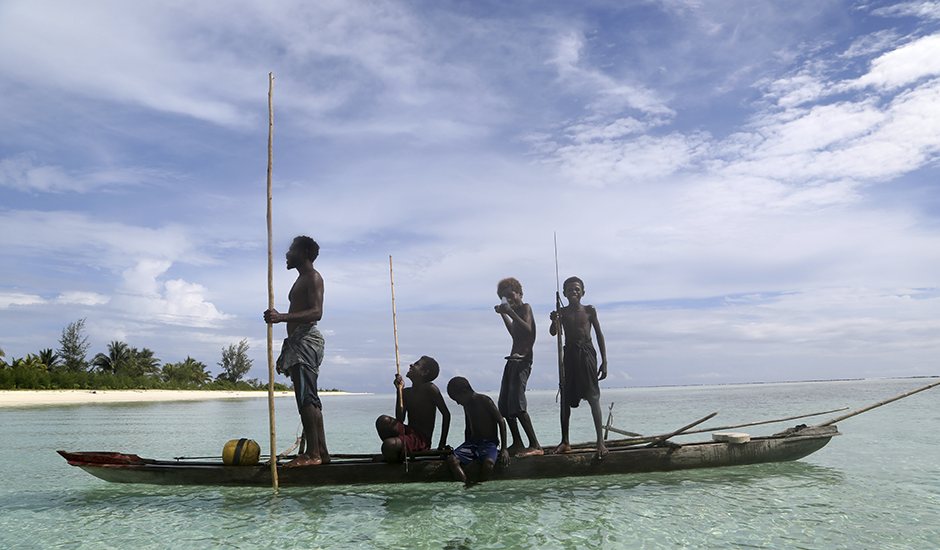
A family fishing on Tsoilik island, Papua New Guinea.View larger picture
All in the same boat … a family fishing on Tsoilik island, Papua New Guinea. Photograph: Kevin Rushby for the Guardian

Kayaking Papua New Guinea

If adventure starts where knowledge ends, Tsoilik, Papua New Guinea, is the place to go. This tiny island may technically be part of Australasia but it feels more like a lost paradise in south-east Asia. It is accessible only by sea kayaking from New Ireland, guides are limited and there's almost no information about the area, so getting there feels like going out on a limb. But once you've kayaked 30 miles and arrived at Rutu's Guesthouse at the northern tip of the island, locals – of which there are a few dozen – will tell you that there's the wreck of a Japanese battleship just offshore. Its rust-brown remnants litter the reef and, as you snorkel around, you'll spot moray eels hiding inside the old torpedo tubes. The darkness of the deep and the fading traces of a forgotten battle have a mysterious allure – and only being able to get there by boat will give you even more of story to tell. 
• A five-day kayaking trip, staying on a different island each night, can be arranged through Nusa Island Retreat (+675 984 2247,nusaislandretreat.com.pg) and costs around £850pp. More information at papuanewguinea.travel

Explore gigantic caves, Vietnam

Son Doong Cave,  VietnamSon Doong Cave. Photograph: Ran Deboodt
Imagine a cave big enough to hold a lake, a river and a whole jungle of tall trees. This is Son Doong cave, in Quang Binh national park near the Vietnamese border with Laos, the largest cave on earth. Very few people – apart from scientists and film crews from the BBC and National Geographic – have penetrated its interior, which is filled with giant stalactites. This gives a certain kudos (and a hefty price tag) to new tours operated by Oxalis which include three days' camping inside the cave. Only 220 permits have been released for this year, so if you're not quick or rich enough, get a similar experience at the nearby Tu Lan caves, which you can explore on tours lasting one to four days (from $75pp). 
• $3,000pp for six days all-inclusive (two nights in a hotel and five camping), flights extra. Departures from February-August. +84 52 367 7678, oxalis.com.vn

Monsoon snake-hunting, India

Gerry Martin, one of India's leading snake experts, is a superb guide on this unusual expedition into southern India's Western Ghats. Trekking deep into jungle-covered mountains, the group will survey all the reptilian and amphibian life, of which there is a huge range, much of it still waiting to be scientifically verified. By assisting in this vital conservation work, you'll get access to wildlife and views of India that few outsiders ever see.
• From £1,000pp for 10 days excluding flights. 8-18 June. +91 80 6570 0638, gerrymartin.in/trips-and-expeditions (email for details)

Exploring Iran and Iraq

The Islamic monument of Soltaniyeh, one of the largest brick domes in the worldThe Islamic monument of Soltaniyeh, one of the largest brick domes in the world
With relations between Iran and the west slowly thawing, travellers are once again beginning to explore this huge and fascinating country. This trip starts in Tehran and heads west, first stopping at the incredible Islamic monument of Soltaniyeh, a 49-metre-high dome (one of the largest brick domes in the world) that's an engineering and architectural wonder. From there, the route climbs into the mountains of Kurdistan, a wild landscape where the volcanic crater of Takht-i-Suleiman (the Throne of Solomon) is surrounded by the ruins of a Zorastrian fire temple. Other highlights include one of the world's oldest cities, Hamadan, a trek in the mountains with Kurdish nomads and a Friday picnic with locals in Ahmadawa, Iraq. 
• From £3,895pp for 15 days, including local transport and meals, but not flights. Departs 20 September. 020-7736 3968, wildfrontierstravel.com

Cross-island cycle, Sri Lanka

This cycling route winds across the island through paddy fields and lowland jungle before cranking up over the twisting roads of the Knuckles Mountains. There is plenty to stop and enjoy along the way: tea plantations, Buddhist shrines and temples, old hill stations with their views and colonial architecture, and the trip finishes with a couple of nights at the beach. 
• Nine nights from £1,899pp (two sharing) including flights, most meals and bike hire. Departs 5 April and 2 October. 01722 718444,discoveradventure.com

On the trail of Genghis Khan, Central Asia

Kazakh eagle hunterA Kazakh eagle hunter in the Altai mountains, western Mongolia. Photograph: David Tipling
Tim Cope's book On the Trail of Genghis Khan is an account of his epic 6,000-mile journey from Ulan Bator to Hungary on foot, camel and horseback. Now Tim is taking an expedition back to his beloved Mongolia to retrace a small section of his three-year journey, which includes climbing into the Altai mountains to visit remote tribes such as the Khotont, and a visit to the territory of the Kazakhs, renowned for hunting with eagles. 
• From £3,290pp for 18 days, including most meals and internal flights. Flights to Ulan Bator extra. Departs 27 July. 020-8545 9030worldexpeditions.co.uk

Village-to-village walking, Nepal 

There's much to recommend these walking holidays, launching in March with specialist Village Ways. Socially and environmentally responsible (the aim is to create jobs in rural areas and minimise the impact of groups of foreign tourists), they're brilliantly organised and cover spectacular yet so far neglected Himalayan terrain – in this case the Sailung Valley, east of Kathmandu. Trips are tailored to walkers' needs – whether that's a hot water bottle in your bed or a lesson in serving the local speciality, buffalo cheese. If that sounds too easy, sign up for the 2014 Mustang Trail Race instead, a 190km Himalayan challenge run that kicks off in Kathmandu on 12 April.
• From £729pp for 10 nights full board, flights extra. Departures from March to mid-June. 01223 750049, villageways.com. The Mustang Trail Race costs $2,750pp including meals, four internal flights and portage but not international flights (mustangtrailrace.com)

Cruise the Ganges, India

ABN RajmahalABN Rajmahal
The most sacred of Indian rivers, the Ganges is tricky to navigate, particularly around Varanasi, where water levels are often low. Until now this has meant that boats big enough to have onboard accommodation haven't operated on that section of the river. In August, however, Assam Bengal Navigation is launching a new boat, the ABN Rajmahal, designed to cope with the shallows on this stretch. Sailing between Patna and Varanasi, the seven-night City of Light cruise will take in Moghul forts, palaces and the sacred Sarnath deer park. There's also great wildlife (look out for the river's famous dolphins) and the chance to see India's holiest city from the water. The boat's 22 en suite cabins all have balconies and passengers can book on-board spa treatments. 
• From £854pp for eight days, including all meals and excursions.